Posts tagged EEG
GEDAI
- 13 October 2025
GEDAI removes noise from EEG recordings without supervision, using leadfield filtering. This package brings the algorithm to Python, alongside its MATLAB reference implementation.
OHBM 2024: EEG microstates neurofeedback for adult attention-deficit hyperactivity disorder
- 17 June 2024
EEG neurofeedback (NFB) may represent a new therapeutic opportunity for ADHD, a neuropsychiatric disorder characterized by attentional deficits and high impulsivity. Several groups have reported an abnormal theta/beta ratio (TBR) in this population. Since then, much of the literature has relied on the observation of abnormal TBR in ADHD populations to create neurofeedback protocols. However, more recent studies have failed to replicate this finding of elevated TBR as a diagnostic feature in ADHD (confirmed in a meta-analysis). These divergent results motivate the need for research to explore new markers to diagnose and treat ADHD. In our recent work, we describe alterations in EEG brain microstates (i.e., recurrent stable periods of short duration) in adult ADHD, potentially representing a biomarker of the disorder. The present study aims to use neurofeedback to manipulate EEG microstates in ADHD patients and healthy controls, in order to observe the effects on neurophysiological, clinical, and behavioral parameters. During this ongoing study, participants are trained to both upregulate and downregulate microstate parameters. Resting-state EEG and a continuous performance task (CPT) are recorded before and after 30 minutes of microstate-based neurofeedback training. Intra- and across-session statistical contrasts, both in terms of brain activity changes and performance, should provide evidence on the impact of microstate changes relative to ADHD behavior.
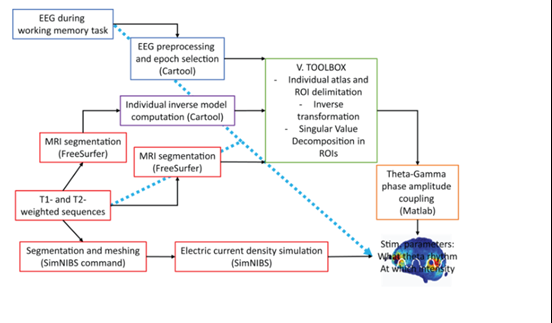
Personalized tACS Pipeline
- 01 May 2024
Working memory difficulties are among the first signs of psychosis, and current medication does little to improve them. Young people with 22q11.2 deletion syndrome are at high risk of psychosis, which makes alternative treatments especially important for them.
ABIM: EEG microstates neurofeedback for adult attention-deficit hyperactivity disorder
- 03 January 2023
EEG neurofeedback (NFB) may represent a new therapeutic opportunity for ADHD, a neuropsychiatric disorder characterized by attentional deficits and high impulsivity. Several groups have reported an abnormal theta/beta ratio (TBR) in this population. Since then, much of the literature has relied on the observation of abnormal TBR in ADHD populations to create neurofeedback protocols. However, more recent studies have failed to replicate this finding of elevated TBR as a diagnostic feature in ADHD (confirmed in a meta-analysis). These divergent results motivate the need for research to explore new markers to diagnose and treat ADHD. In our recent work, we describe alterations in EEG brain microstates (i.e., recurrent stable periods of short duration) in adult ADHD, potentially representing a biomarker of the disorder. The present study aims to use neurofeedback to manipulate EEG microstates in ADHD patients and healthy controls, in order to observe the effects on neurophysiological, clinical, and behavioral parameters. During this ongoing study, participants are trained to both upregulate and downregulate microstate parameters. Resting-state EEG and a continuous performance task (CPT) are recorded before and after 30 minutes of microstate-based neurofeedback training. Intra- and across-session statistical contrasts, both in terms of brain activity changes and performance, should provide evidence on the impact of microstate changes relative to ADHD behavior.
Pycrostates
- 04 November 2020
Pycrostates is a Python library for EEG microstate analysis. I’m very proud of this project, as it was the first of mine to reach beyond my local community. It fills a real need, is now used around the world, and has more than 50 stars on GitHub.

Pycartool
- 18 July 2019
PyCartool is a simple open-source Python package that provides I/O for most Cartool file formats, as well as additional computing features.